.png)


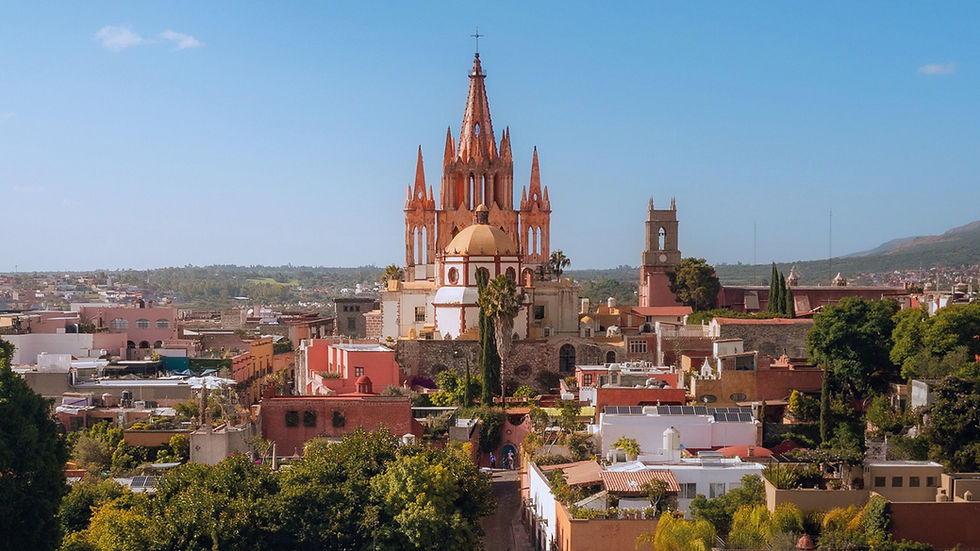
The Quiet Discipline That Decides a Destination's Future: San Miguel De Allende Is Entering A New Phase
By Lisa Babincsak
In the previous article in this series, I wrote about the difference between building projects and building a destination — and the structural risk that emerges when growth outpaces the ecosystem supporting it.
But naming the risk is only part of the conversation. The harder question is what actually prevents it.
Because coherence does not maintain itself. Destinations do not stay cohesive simply because their early years were thoughtful, or because their architecture was beautiful, or because the brands operating within them are well-regarded. Coherence is held — actively, over time, by people willing to make decisions against something larger than the immediate opportunity in front of them.
That discipline has a name. It is stewardship. And it is the quietest, most underestimated force shaping the long-term future of any destination.
Stewardship is often confused with preservation, but they are not the same. Preservation tries to hold a place still. Stewardship accepts that a place will change — and takes responsibility for how it changes. It is the discipline of holding a destination's long-term coherence against the steady pressure of short-term decisions that, individually, may seem entirely reasonable. This is what makes stewardship so difficult. Extraction rarely arrives as a single visible decision. It accumulates through small deviations — a project approved slightly outside the original logic of the place, an infrastructure decision deferred, a community concern absorbed but not addressed, a standard quietly relaxed.
Each compromise looks minor in isolation. Together, over years, they reshape the destination entirely.By the time the shift is visible, the underlying coherence has often been eroding for some time.
What makes this particularly dangerous is that destinations often continue to appear successful while the erosion is occurring. Visitor numbers may still rise. New projects may continue to enter the pipeline. Investment may continue to flow. The signals that matter most are often qualitative rather than quantitative — visible first in the lived experience of residents, the character of the place, and the subtle loss of the qualities that made the destination distinctive to begin with.This is why stewardship cannot be delegated to a framework, a master plan, or a brand standard. Those instruments matter, but none of them produce stewardship on their own.
Stewardship requires presence. It requires people who are in genuine relationship with the place itself — accountable to something beyond the deal in front of them, and willing to make decisions that hold a longer horizon than the financial model demands. In San Miguel, that work has historically been carried by a particular kind of resident — long-tenured locals, cultural institutions, families who have watched the town evolve across decades, business owners whose relationship to the place predates the current expansion cycle. They have functioned as the destination's de facto stewards, often unnamed.
But as the scale of capital entering the market grows, stewardship can no longer remain only in those hands. The hospitality groups, developers, and investment partners now entering San Miguel are not neutral participants. They will either step into stewardship — accepting responsibility for the long-term coherence of the place their projects rely on — or they will accelerate extraction bydefault. There is no third position. A project that is profitable in isolation while quietly weakening the ecosystem around it is not a neutral outcome. It is a stewardship failure with a financial return.
What stewardship actually requires is not mysterious, but it is demanding. It means holding decisions against a longer time horizon than any single project lifecycle — protecting what cannot be rebuilt: atmosphere, trust, social fabric, ecological capacity, the quiet qualities thatmake a destination worth arriving in the first place. And it means being willing to accept less in the short term because the alternative quietly destroys what the return depends on. This is not a constraint on growth. It is the discipline that makes growth durable. San Miguel is approaching a moment where this question becomes central. What is being built now will shape this place for decades.
The deciding factor will not be the quality of any individual project. It will be whether the people and institutions shaping the next phase of San Miguel choose to act as stewards of the destination — or only as developers of their own positions within it.
Because long-term destinations are not held together by architecture, capital, or brand.
They are held together by the quiet discipline of those willing to steward them.
Lisa Babincsak is a San Miguel–based writer, interior designer, and real estate agent. Her deeper work tracks how we lost our humanity and maps the path for return.


Comentarios